A cultural research into the opposite signifiance of this adjectives

Saturday, October 30, 2010

Narthex

Nartex of a Patriarchate Monastery in Serbia
The narthex of a church is the entrance or lobby area, located at the end of the nave, at the far end from the church's main altar. Traditionally the narthex was a part of the church building, but was not considered part of the church proper. It was either an indoor area separated from the nave by a screen or rail, or an external structure such as a porch.
Narthex works like a filter, allowing those not eligible for admittance into the general congregation to hear and partake in the service.


Pantheon oculus

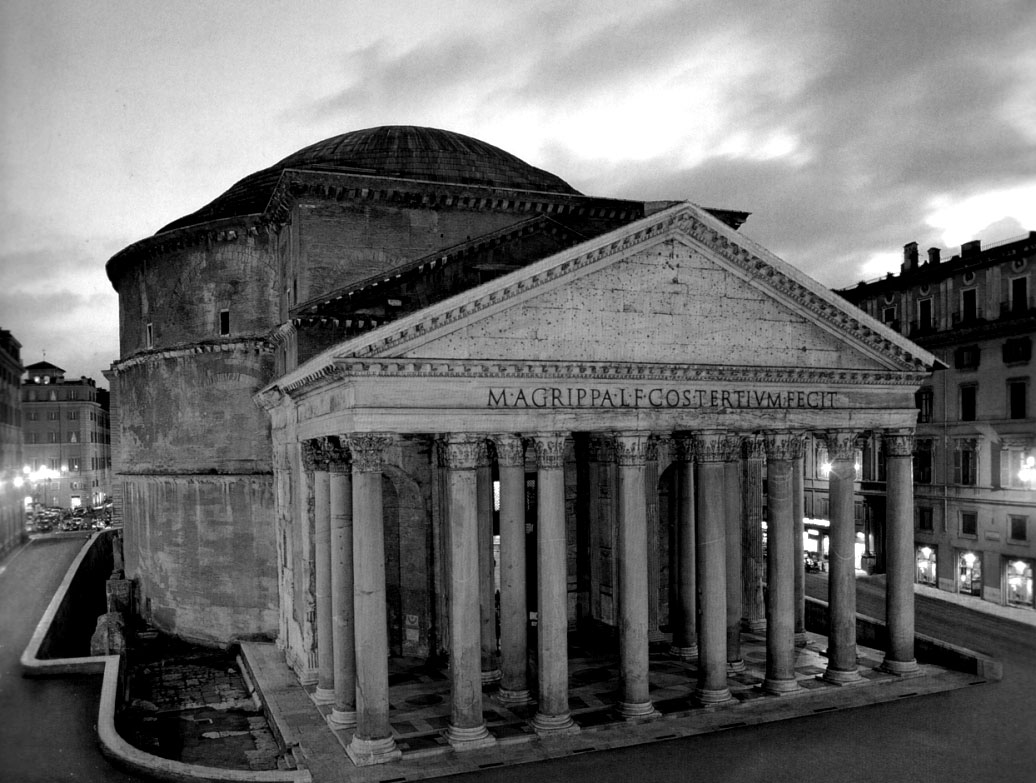
Pantheon, Rome, 126 AD
The Pantheon is a building in Rome, commissioned by Marcus Agrippa as atemple to all the gods of Ancient Rome, and rebuilt by Emperor Hadrian in about 126 AD. The building is circular with a portico, under a coffered, concrete dome, with a central opening to the sky, called Oculus. 

Inside the Pantheon
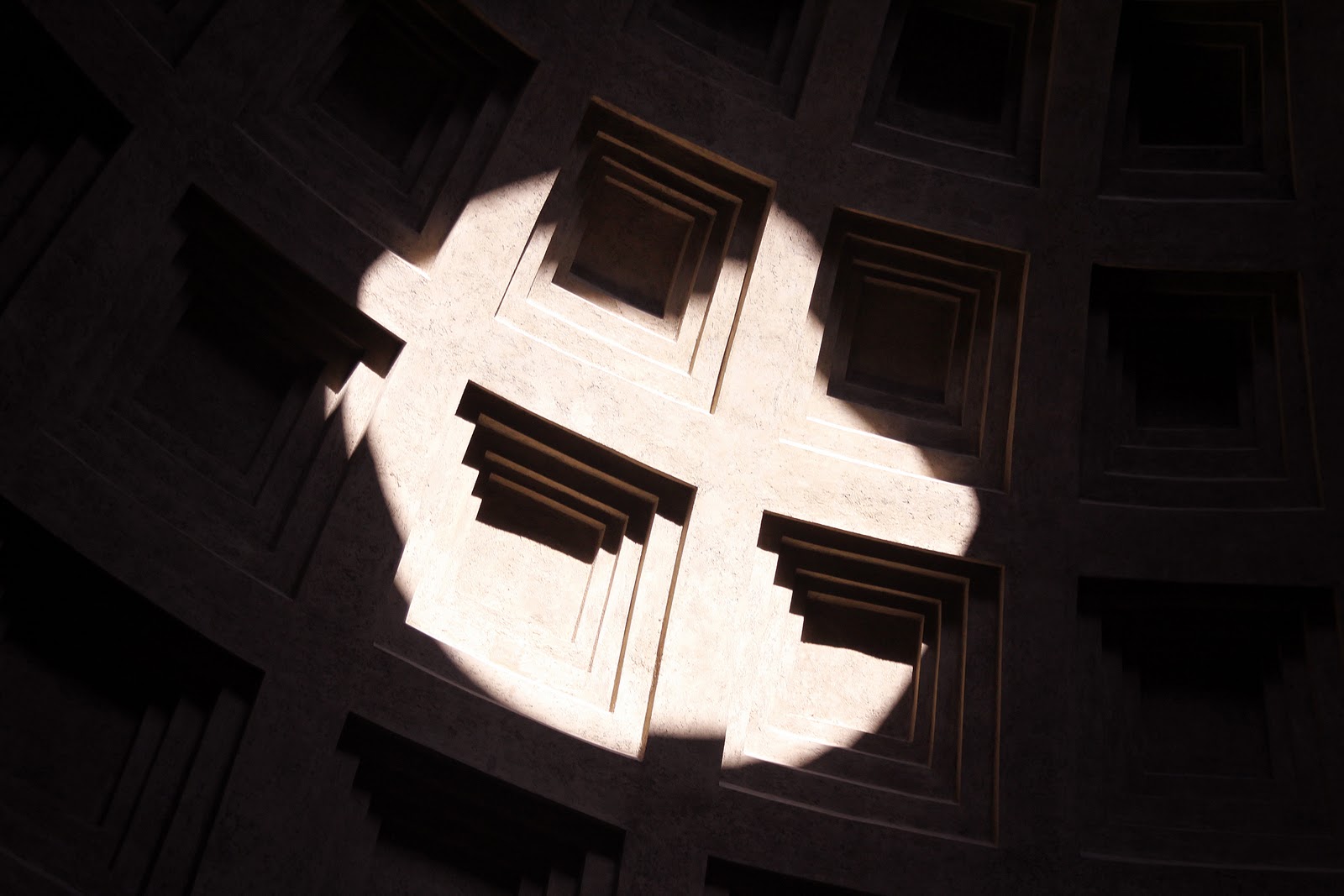
The oculus at the dome's apex and the entry door are the only sources of light in the interior. Throughout the day, the light from the oculus moves around this space in a sort of reverse sundial effect. The oculus also serves as a cooling and ventilation method. When the rain is lighter, the temperature difference between the interior and the exterior of the Pantheon origins an air draught that comes out trough the oculus don't allowing rain to enter. Naturally, during storms, a drainage system below the floor handles the rain that falls through the oculus.

Oculus shadow on the dome

Proverbi

Piccola spugna ritiene acqua.

Chi cade nell'acqua è forza che si bagni. (Giovanni Verga)

Non mi curo dell'acqua che non bagna.

L'amore passa sette muri.

Le mura, per quanto forti, non possono impedire il volo del pensiero.

Impara l'arte e mettila da parte.

Chi va con lo zoppo impara a zoppicare

Bevi del buon vino e lascia andare l'acqua al mulino.

I danari van via come l'acqua benedetta.

Dove non va acqua ci vuol la zappa.

A combatter con il fango, che si vinca o che si perda, sempre ci si infanga.

Chi ara terra bagnata, per tre anni l'ha dissipata.

Osmotic membrane


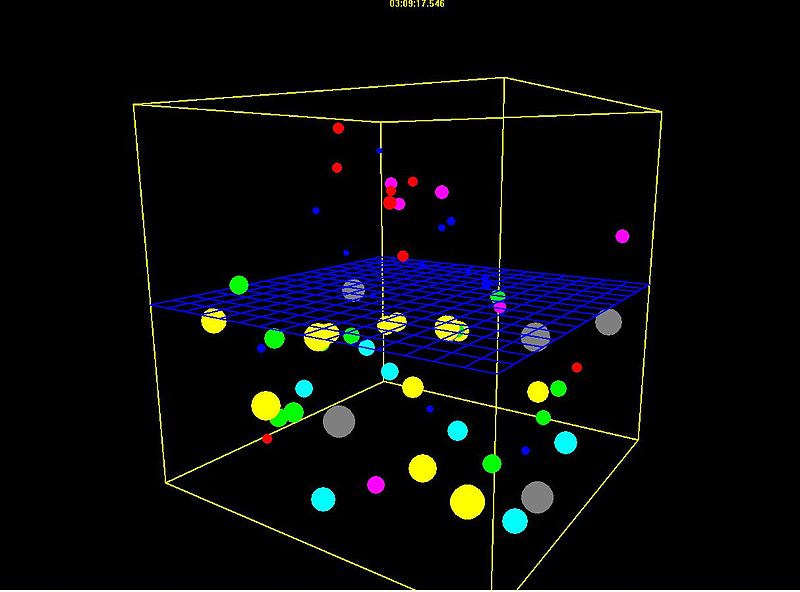
Osmosis is the movement of water molecules across a selectively-permeable membrane down a water potential gradient. It is a physical process in which a solvent moves, without input of energy, across a semipermeable membrane (permeable to the solvent, but not the solute) separating two solutions of different concentrations. Osmosis releases energy, and can be made to do work.
Osmosis is important in biological systems, as many biological membranes are semipermeable. In general, these membranes are impermeable to organic solutes with large molecules. Permeability may depend on solubility properties, charge, or chemistry, as well as solute size. Osmosis provides the primary means by which water is transported into and out of cells.

Shot of a computer simulation of the process of osmosis

Filter press


The filter press is an industrial machine used to drain the sludge by solid-liquid separation processes. In other words, the filter-system is a reduction in volume of liquids that are in suspended solids.
The filter consists of a series of plates or dishes (plate) alternating with canvas (frame) that adhere to one form to another room, where the panel is formed of dried mud. The mud is pumped at high pressure inside the filter. The solid phase is retained in the spaces between the plates and frames and filter out the liquid phase, low in suspended solids. The subsequent recovery of the solid phase takes place with the opening of the filter, when the sludge have filled the gap.

@ Watch how a Filter press works

Büchner funnel


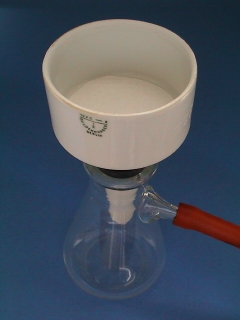
A Büchner funnel is a piece of laboratory equipment used in suction filtration. It is traditionally made of porcelain, but glass and plastic funnels are also available. On top of the funnel-shaped part there is a cylinder with a perforated plate separating it from the funnel.
The filtration material, usually filter paper, is placed on the plate, and the filter paper is moistened with a solvent to prevent initial leakage. The liquid to be filtered is poured into the cylinder and drawn through the perforated plate by vacuum suction.
The main advantage in using this type of filtration is that it proceeds much more quickly (several orders of magnitude) than simply allowing the solvent to drain through the filter medium via the force of gravity.


Submarine submersion


Sometimes even the objects that appear instinctively extremely waterproof, need a porous parts to interface with the outside.
For general submersion or surfacing, submarines use the forward and aft tanks, called Main Ballast Tanks or MBTs, which are filled with water to submerge, or filled with air to surface. Under submerged conditions, MBTs generally remain flooded, which simplifies their design, and on many submarines these tanks are a section of interhull space. For more precise and quick control of depth, submarines use smaller Depth Control Tanks or DCTs. The amount of water in depth control tanks can be controlled either to reflect changes in outside conditions or change depth. Depth control tanks can be located either near the submarine's center of gravity, or separated along the submarine body to prevent affecting trim.

A submarine technical section
@ Watch this fanny video to better understand laws that involve submarine submersion