A cultural research into the opposite signifiance of this adjectives
Showing posts with label Objects. Show all posts

Sunday, February 6, 2011

Plaster


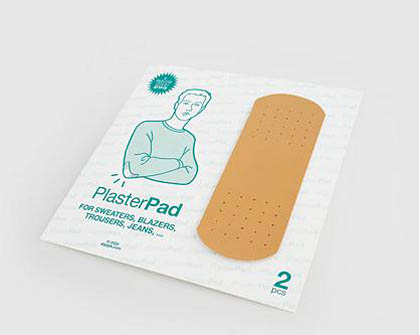
For injuries not serious enough to require a full-size bandage plaster protects the cut from friction, germs, damage, or dirt. Thus, the healing process of the body is less disturbed.
Plaster must be at the same time porous, to the skin to breathe, absorbent, usually having an absorbent pad with antiseptic, and waterproof, not to let out the blood.


Special blue bandages are used by food handlers. These are waterproof, have strong adhesive so they are less likely to fall off, and are usually bright blue in color so that it is obvious to the wearer if it has fallen off into some food.

Thursday, January 27, 2011

Puzzle Jug

Puzzle jug with inscriptions
A puzzle jug is a puzzle in the form of a jug. The challenge is to drink the contents without spilling, which, because the neck of the jug is perforated, is impossible to do conventionally. Usually on the jug there are inscriptions like Come drink of me and merry be or Come drink your fill, but do not spill.
Puzzle jugs of varying quality were popular in homes and taverns, especially during the 18th and 19th centuries.

@ More about Puzzle Jug

Sunscreen

Sunscreen is able to absorbs or reflects some of the sun's ultraviolet (UV) radiation on the skin exposed to sunlight and thus helps protect against sunburn. To absorb UV radiation sunscreens contain organic or inorganic particulate governed to about 90% by absorption and 10% by scattering of UV light. In addition, many sunscreens are waterproof, to keep the effect while swimming.
Many sunscreens do not block UVA radiation, which does not cause sunburn but can increase the rate of melanoma. Additionally, sunscreens block UVB, and if used consistently this can cause a deficiency of vitamin D.

@B View advertising of Extreme Waterproof

Baggage scanner

Scanned image of a luggage bag
To increase security at airports, all baggage is scanned by X-rays with a procedure similar to that of radiography. So you can also pass through what you cannot see with human eyes only.

@B Learn how Radiography works

Tullgren funnel

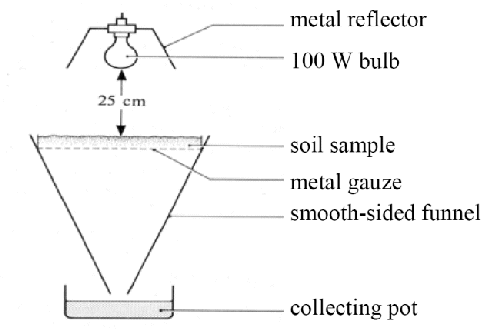
A Tullgren funnel, also known as Berlese funnel, is an apparatus used to extract living organisms from samples of soil. The Tullgren funnel works by creating a temperature gradient over the sample, such that mobile organisms will move away from the warmer temperatures, and fall into a collecting vessel where they perish, and are preserved for examination. Animals escaping from the dessiccation of the litter descend through a filter into a preservative liquid in a receptacle.

Wednesday, January 26, 2011

Optical fiber

An optical fiber or optical fibre is a thin, flexible, transparent fiber that acts as a waveguide, or "light pipe", to transmit light between the two ends of the fiber. Fibers are used instead of metal wires because signals travel along them with less loss and are also immune to electromagnetic interference. Furthermore, because optical fibers transmit only the light, while this is produced by an external generator, they can directly pass through hostile environments for electrical cables, such as water.
optical fiber pool lighting
@ Watch how optical fiber work

PATENT: Method of producing optical waveguide fibers, Keck et al. 1970

Audio filter


They are called filters audio devices that accept an input signal and returns its entire output in just one part. audio filters are often different depending on sound frequency. Low-pass, that enables only frequencies below a certain point called the cutoff, High-pass, that does the opposite of the low-pass, band-pass and rejecy band.

Look how to make a low pass filter

Radiography

Radiography is the use of X-rays to view a non uniformly composed material such as the human body.
A heterogeneous beam of X-rays is produced by an X-ray generator and is projected toward an object. According to the density and composition of the different areas of the object a proportion of X-rays are absorbed by the object. The X-rays that pass through are then captured behind the object by a detector which gives a 2D representation of all the structures superimposed on each other.

@ More about Radiography

Wednesday, January 5, 2011

Asabikeshiinh - Dream Catcher


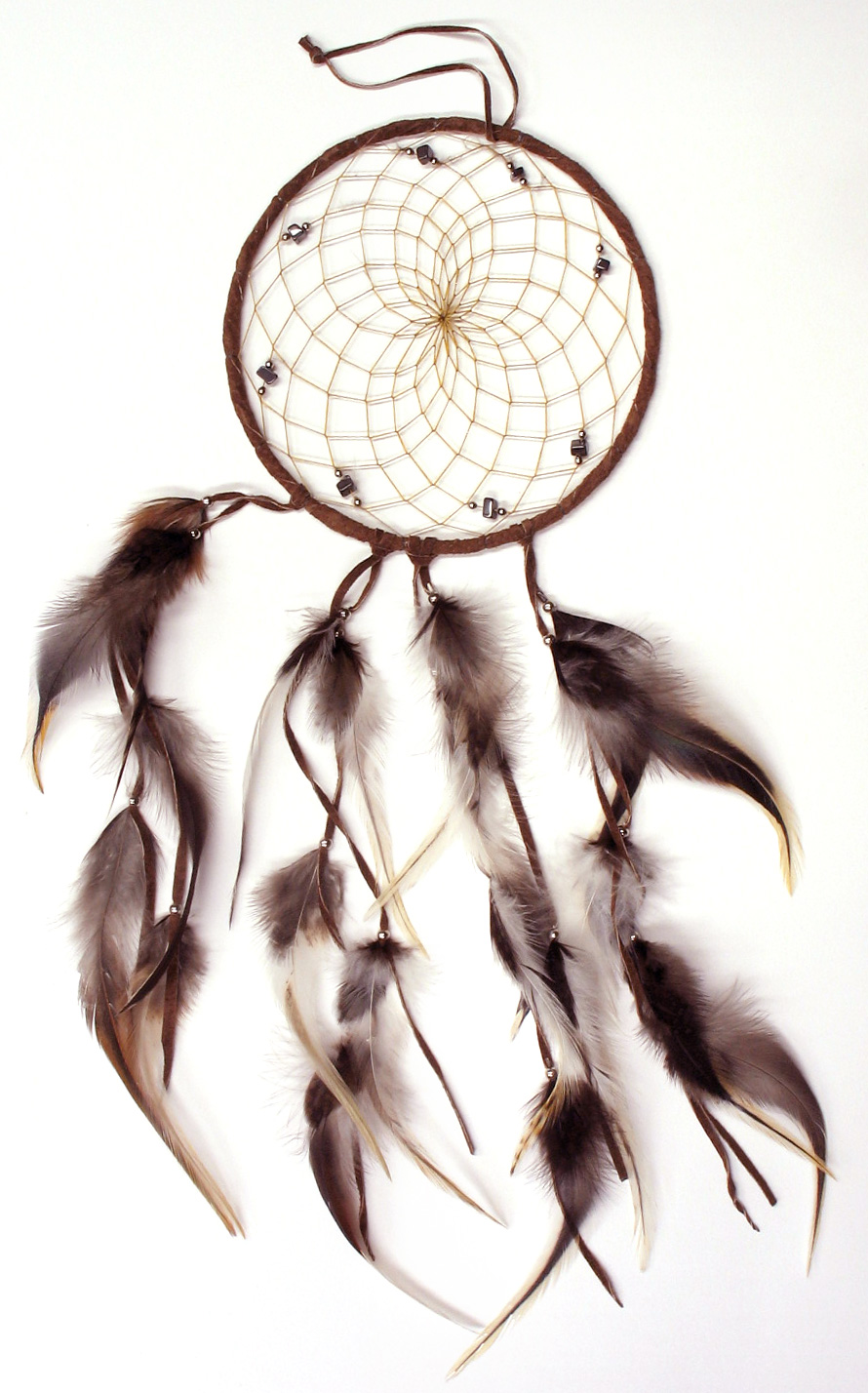
In Ojibwa (Chippewa) culture, a dreamcatcher is a handmade object based on a willow hoop, on which is woven a loose net or web. The dreamcatcher is then decorated with personal and sacred items such as feathers and beads.

The Ojibwa believe that a dreamcatcher changes a person's dreams. According to Konrad J. Kaweczynski, Only good dreams would be allowed to filter through. Bad dreams would stay in the net, disappearing with the light of day. Good dreams would pass through and slide down the feathers to the sleeper.


Tuesday, November 23, 2010

Cathode Ray Tube


In old Tv the Cathode Ray Tube was a vacuum tube containing an electron gun (a source of electrons) and a fluorescent screen, with internal or external means to accelerate and deflect the electron beam, used to create images in the form of light emitted from the fluorescent screen.
To create images the electrons must pass through a perforated plate, which directs the flow.Soon after, they collides with the fluorescent screen, which completely blocks the rays, transforming them into light.


Monday, November 1, 2010

Fencing Mask


Fencing mask has to allow the vision through a metallic grid, and to protect the face by swords attacks, including a bib which protects the neck.
Mask can usually support 12 kg on the metal mesh, 350 newtons of penetration resistance on the bib, however FIE regulation masks must withstand much more, 25 kg on the mesh and 1600 newtons on the bib. Some modern masks have a see-through visor in the front of the mask.


@ Know more about professional fence

Saturday, October 30, 2010

Filter press


The filter press is an industrial machine used to drain the sludge by solid-liquid separation processes. In other words, the filter-system is a reduction in volume of liquids that are in suspended solids.
The filter consists of a series of plates or dishes (plate) alternating with canvas (frame) that adhere to one form to another room, where the panel is formed of dried mud. The mud is pumped at high pressure inside the filter. The solid phase is retained in the spaces between the plates and frames and filter out the liquid phase, low in suspended solids. The subsequent recovery of the solid phase takes place with the opening of the filter, when the sludge have filled the gap.

@ Watch how a Filter press works

Büchner funnel


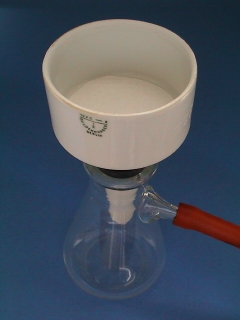
A Büchner funnel is a piece of laboratory equipment used in suction filtration. It is traditionally made of porcelain, but glass and plastic funnels are also available. On top of the funnel-shaped part there is a cylinder with a perforated plate separating it from the funnel.
The filtration material, usually filter paper, is placed on the plate, and the filter paper is moistened with a solvent to prevent initial leakage. The liquid to be filtered is poured into the cylinder and drawn through the perforated plate by vacuum suction.
The main advantage in using this type of filtration is that it proceeds much more quickly (several orders of magnitude) than simply allowing the solvent to drain through the filter medium via the force of gravity.


Submarine submersion


Sometimes even the objects that appear instinctively extremely waterproof, need a porous parts to interface with the outside.
For general submersion or surfacing, submarines use the forward and aft tanks, called Main Ballast Tanks or MBTs, which are filled with water to submerge, or filled with air to surface. Under submerged conditions, MBTs generally remain flooded, which simplifies their design, and on many submarines these tanks are a section of interhull space. For more precise and quick control of depth, submarines use smaller Depth Control Tanks or DCTs. The amount of water in depth control tanks can be controlled either to reflect changes in outside conditions or change depth. Depth control tanks can be located either near the submarine's center of gravity, or separated along the submarine body to prevent affecting trim.

A submarine technical section
@ Watch this fanny video to better understand laws that involve submarine submersion

Wednesday, October 20, 2010

Clay


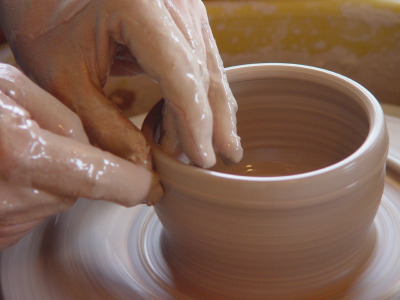
Clays exhibit plasticity when mixed with water in certain proportions. When dry, clay becomes firm and when fired in a kiln, permanent physical and chemical reactions occur. These reactions, among other changes, cause the clay to be converted into a ceramic material.

Because of these properties, clay is used for making pottery items, both utilitarian and decorative. Different types of clay give different properties and different colors, from a dull gray to a deep orange-red.


Clay, being relatively impermeable to water, is also used where natural seals are needed, such as in the cores of dams, or as a barrier in landfills against toxic seepage

Recent studies have investigated clay's absorption capacities in various applications, such as the removal of heavy metals from waste water and air purification.

@ Click here to discover the wonders of Richard Ginori's clay

Cork


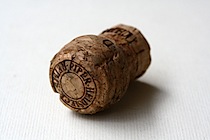
Cork is composed of suberin, a hydrophobic substance, and because of its impermeability, buoyancy, elasticity, and fire resistance, it is used in a variety of products.

Cork's elasticity combined with its near-impermeability makes it suitable as a material for bottle stoppers, especially for wine bottles.

Sometimes a wine can have an unpleasant aroma (oftentimes caused by hydrogen sulfide, a byproduct of the fermentation process) that is completely trapped inside a screw-capped bottle. A cork, porous by nature, might let the unwanted aroma leak out.


Know more about the importance of a good crop