A cultural research into the opposite signifiance of this adjectives

Wednesday, January 5, 2011

Permeable Membrane

There’s a permeable membrane between art and society. A continuous dialectical motion. Tides brining the estuary. River flowing into sea. A writer describes the landmass “stained” current of the Congo River as discernible three hundred miles out on the ocean. Likewise: the matter of art enters the bloodstream of social energy. Call and response. The empathetic imagination can transform, but we can’t identify precise loci of transformation, can’t track or quantify the moments. Nor say how or when they lead, through innumerable unpredictable passageways, toward recreating survival, undermining illegitimate power and its cruelties.
Nor how newly unlocked social energies, movements of people, demand a renewed social dialogue with art: a spontaneous release of language and forms.
René Char: The poet bursts the bonds of what he touches. He does not teach the end of bonds. She cannot teach the end of bonds; but she can refuse to justify, accord with, ignore their existence.

Adrienne Rich, Permeable Membrane, 2006

@ Read all Permeable Membrane

Permeable

A poem for Sukkot


Today I'll finish our sukkah
stacking old wildflowers
to hint at roof, twining tinsel
around the slats

all year we imagine
our houses are our houses
stable and comfortable
waterproof and familiar

but these seven days
remind us that permanence
is overrated, that our true home
is under the stars

change is always underway
nine short weeks remain
until you'll leave the home
you probably think is forever

and enter our world
airy and unpredictable
where we won't know what you need
even sometimes when you tell us

your first big leap of faith, kid:
into nothing you've ever known
into the fragile sukkah
we've decorated just for you


Rachel Barenblat, 2009

Tao Te Ching

誰可以 在泥濘的水 讓它是寂靜的  它
會逐漸變得清晰起來。誰可以安全休息的條件
讓運動下去  休息的條件將逐漸出現。


Who can (make) the muddy water (clear)? Let it be still, and it will gradually become clear. Who can secure the condition of rest? Let movement go on, and the condition of rest will gradually arise. 

Lao-Tzu, Tao Te Ching, Chapter 15, 3

Chi va con lo zoppo

Cum placidissimo et facillimo et minime anxio morosoque uiuendum est; sumuntur a conuersantibus mores et ut quaedam in contactos corporis uitia transiliunt, ita animus mala sua proximis tradit: ebriosus conuictores in amorem meri traxit, inpudicorum coetus fortem quoque et silice natum uirum emolliit, auaritia in proximos uirus suum transtulit.

Seneca, De Ira, Liber III, 8

L'infinito

Sempre caro mi fu quest'ermo colle,
e questa siepe, che da tanta parte
dell'ultimo orizzonte il guardo esclude.
Ma sedendo e mirando, interminati
spazi di là da quella, e sovrumani
silenzi, e profondissima quïete
io nel pensier mi fingo, ove per poco
il cor non si spaura. E come il vento
odo stormir tra queste piante, io quello
infinito silenzio a questa voce
vo comparando: e mi sovvien l'eterno,
e le morte stagioni, e la presente
e viva, e il suon di lei. Così tra questa
immensità s'annega il pensier mio:
e il naufragar m'è dolce in questo mare

Giacomo Leopardi, Canti XII

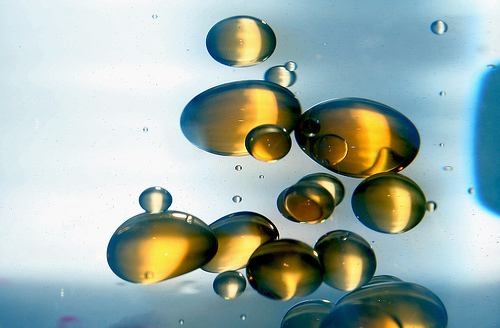
Pour oil on troubled waters


If a person pours oil on troubled waters, they do or say something to calm a tense situation. "James is an good negotiator, and always manages to pour oil on troubled waters."

Water under the bridge


If something difficult or unpleasant took place in the past but is no longer important, it is referred to as water under the bridge. "They had a serious disagreement in the past but that's water under
the bridge."